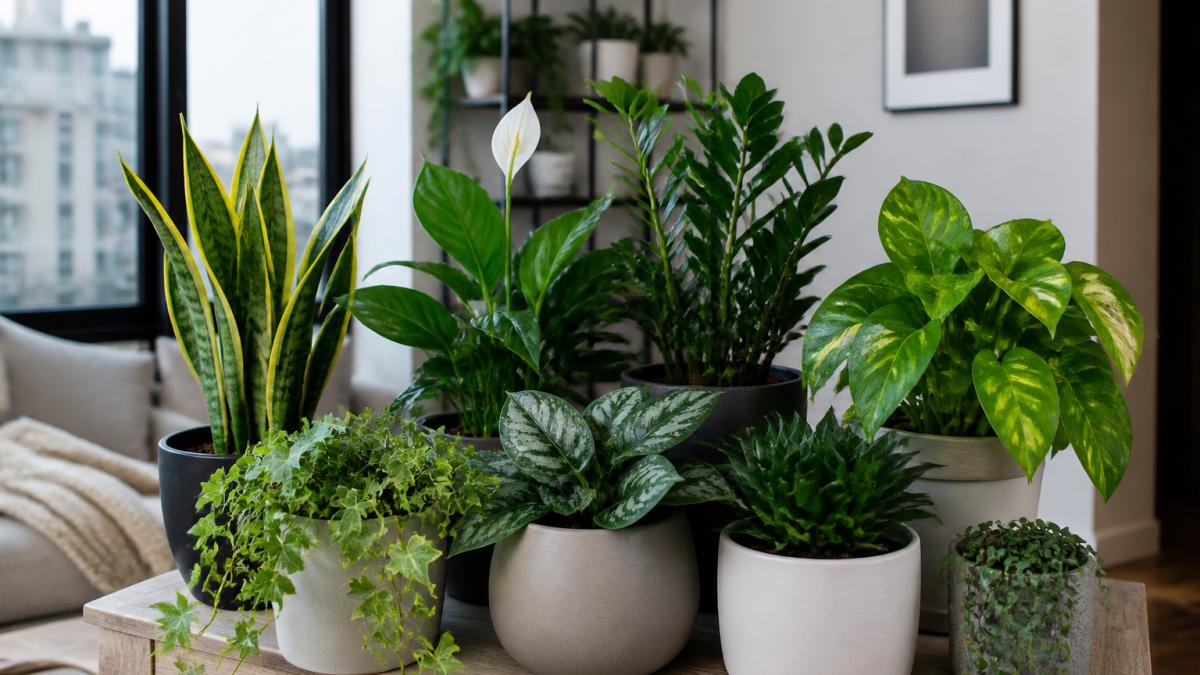
 listicle
10 Best Low-Light Houseplants for Apartments
Table of Contents
- How to Identify Low-Light Conditions in Your Apartment
- 10 Best Low-Light Houseplants for Apartment Living
- 1. Snake Plant: The Neglect-Tolerant Choice
- 2. ZZ Plant: Minimal Light, Maximum Impact
- 3. Golden Pothos: Trailing Beauty for Shelves
- 4. Cast Iron Plant: Nearly Indestructible
- 5. Heartleaf Philodendron: Soft and Forgiving
- 6. Parlor Palm: Tropical Without Direct Sun
- 7. Spider Plant: Pet-Safe and Propagating
- How to Care for Indoor Houseplants in Low Light
- Low-Light Plant Watering Schedule and Drainage
- Recognizing Signs of Plant Light Stress
- Maximizing Vertical Space With Shade-Tolerant Plants
- Pet-Safe Low-Light Options
- Frequently Asked Questions
Last Updated: September 27, 2026
How to Identify Low-Light Conditions in Your Apartment
Low-light conditions exist in spaces that receive fewer than 100 foot-candles of light throughout the day. Most apartments have at least one area, a north-facing corner, an interior hallway, or a room blocked by buildings outside, where natural light is genuinely scarce. The challenge isn't finding these spots; it's choosing the right low-light houseplants apartments need that will actually thrive there.
At Yole Flower Boutique, we can help you select the perfect low-light houseplants for apartments and provide guidance on care that fits your schedule. The first step is honestly assessing what "low light" means in your space. Hold your hand at plant height and see if you can read a newspaper comfortably without straining. If you can't, you're in true low light. Alternatively, if your windows receive no direct sun and you can't see clear shadows on the floor, that's your signal.
Low-light areas fall into two categories: spaces with some indirect light (near a window but shaded by buildings, trees, or curtains) and spaces with almost no natural light at all (interior hallways, bathrooms without windows, closets). Understanding which you have matters because even shade-tolerant plants need some light.
10 Best Low-Light Houseplants for Apartment Living
1. Snake Plant: The Neglect-Tolerant Choice
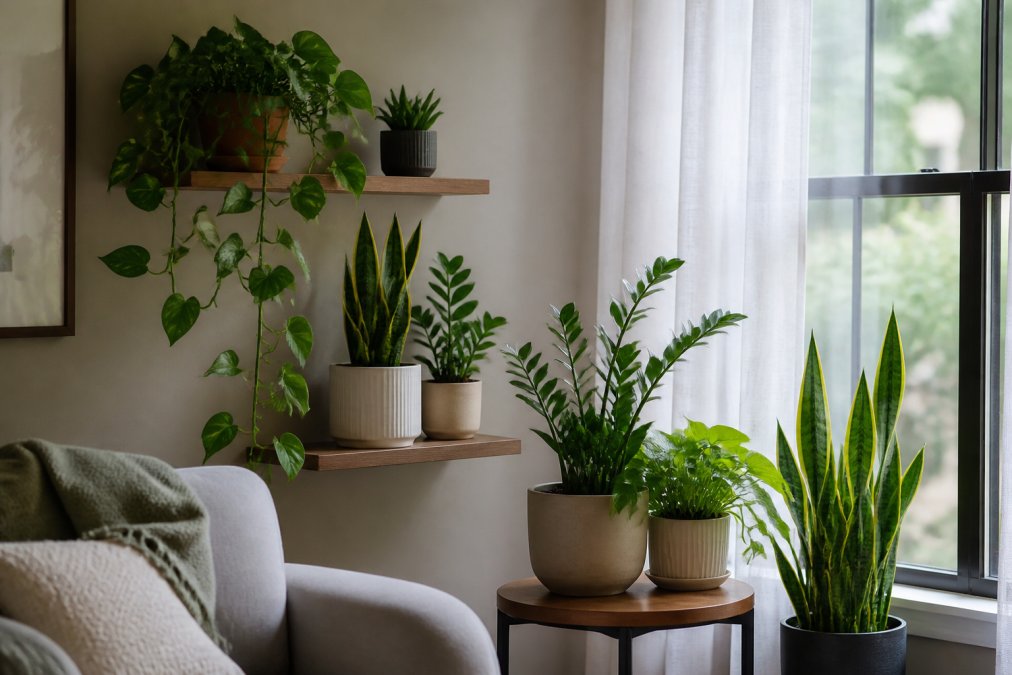
The snake plant earns its reputation as nearly indestructible. Its upright, sword-like foliage works in corners, on shelves, or beside a desk, and it tolerates neglect better than almost any other houseplant. Snake plants store water in their leaves, so they thrive on infrequent watering, typically once every 3-4 weeks in winter and every 2-3 weeks during growing season.
Pros:
- Requires very infrequent watering
- Thrives in almost any light condition
- Compact, architectural appearance
Cons:
- Slow growth rate
- Toxic to pets if ingested
2. ZZ Plant: Minimal Light, Maximum Impact
The ZZ plant handles dim spaces better than most houseplants because its rhizome root system stores water and nutrients underground. This means it can go longer between waterings than shallow-rooted plants. The glossy, deep green leaves reflect whatever light is available, making the plant appear brighter than its surroundings.
Pros:
- Extremely low maintenance
- Tolerates dry indoor air
- Glossy foliage reflects light
Cons:
- Toxic if ingested by pets
- Slow to establish and grow
3. Golden Pothos: Trailing Beauty for Shelves
Golden pothos (also called devil's ivy) is one of the fastest-growing trailing vines you can buy. Its heart-shaped, variegated leaves cascade beautifully from high shelves or hanging planters, and it adapts to many light levels. The plant signals when it needs water by drooping slightly, a built-in reminder that takes the guesswork out of watering.
Pros:
- Fast-growing and visually interesting
- Easy to propagate in water
- Signals water needs through leaf droop
Cons:
- Requires occasional pruning
- Can become leggy in very dim light
- Toxic to pets
4. Cast Iron Plant: Nearly Indestructible
The cast iron plant earned its name honestly. It survives in harsh, low-light environments where other plants fail. The dark green, leathery leaves are compact and slow-growing, so the plant stays manageable in size. It tolerates temperature fluctuations, drafts, and dry air without complaint.
Pros:
- Extremely long-lived
- Resistant to neglect and poor conditions
- Tolerates temperature swings
Cons:
- Higher price point
- Very slow growth
5. Heartleaf Philodendron: Soft and Forgiving
Heartleaf philodendrons have soft, matte-finish leaves and a trailing growth habit that works well on bookshelves or in wall-mounted planters. They adapt to low-light corners better than many trailing plants and are extremely forgiving of missed waterings. The vining stems root easily in water, so propagation is simple.
Pros:
- Very forgiving of missed waterings
- Easy to find at local nurseries
- Simple to propagate
Cons:
- Can become leggy in very low light
- Requires occasional pruning
- Toxic to pets
6. Parlor Palm: Tropical Without Direct Sun
The parlor palm brings a tropical aesthetic to apartments without needing direct sun. Its feathery, arching fronds add height and texture to living rooms, and it stays compact enough for tabletops or corners. Parlor palms thrive in moderate humidity, so bathrooms are ideal locations.
Pros:
- Non-toxic to pets
- Adds tropical aesthetic
- Slow growth keeps it manageable
Cons:
- Sensitive to overwatering
- Requires moderate humidity
- More expensive than some alternatives
7. Spider Plant: Pet-Safe and Propagating
Spider plants are nearly impossible to kill and safe for cats and dogs. The arching, grass-like foliage is visually interesting, and the plant produces baby plantlets (spiderettes) that dangle from the mother plant like tiny green orbs. These babies can be propagated into new plants, making spider plants endlessly generous.
Pros:
- Safe for cats and dogs
- Produces propagating babies
- Very easy to grow
Cons:
- Leaf tips can brown from fluoride in water
- Less architectural than some alternatives
How to Care for Indoor Houseplants in Low Light
Low-light houseplants need different care than plants in brighter conditions. The biggest adjustment is watering. Plants in dim spaces grow more slowly and use less water because photosynthesis happens at a reduced rate. Overwatering is the leading cause of death for shade-tolerant plants.
Choosing the Right Potting Mix
Low-light houseplants benefit from a potting mix that drains well but retains some moisture. A standard indoor potting mix works for most shade-tolerant plants, but adding perlite or orchid bark improves drainage and prevents root rot. Mix one part perlite or bark into three parts potting mix for plants like ZZ and cast iron plant.
Managing Humidity Levels
Humidity matters more in low light because it reduces stress on plants that are already working harder to photosynthesize. Most apartments are dry, especially in winter when heating runs constantly. Grouping plants together creates a microclimate with higher humidity. Misting foliage occasionally helps, though it's not a substitute for improved drainage and proper watering.
Low-Light Plant Watering Schedule and Drainage
A typical watering schedule for low-light houseplants looks like this: check soil moisture weekly, water only when the top inch feels dry, and adjust frequency based on season. Winter watering happens roughly half as often as summer watering because growth slows dramatically.
Recognizing Signs of Plant Light Stress
Plants in insufficient light show specific symptoms. Leaves become smaller and more widely spaced on stems. Growth slows dramatically or stops entirely. New leaves emerge smaller and paler than older growth. Variegated plants (like golden pothos or Chinese evergreen) lose their color patterns and become solid green as they strain to capture more light.
Maximizing Vertical Space With Shade-Tolerant Plants
Apartments often lack floor space, but vertical space is underutilized. Trailing plants like golden pothos and heartleaf philodendron work beautifully on tall shelves or hanging from wall-mounted planters. Upright plants like snake plant and cast iron plant fit into corners and narrow gaps beside furniture.
Pet-Safe Low-Light Options
If you have cats or dogs, several low-light houseplants are completely safe. Spider plants are the gold standard, cats love them and can't hurt themselves by nibbling. Parlor palms are non-toxic and add tropical appeal. Prayer plants, while preferring slightly more light than true low-light conditions, are safe if you have a spot with bright indirect light.
Frequently Asked Questions
What are the best low-light houseplants for apartments with minimal windows?
Snake plants, ZZ plants, and cast iron plants excel in extremely low-light apartments. These shade-tolerant options survive in windowless corners or rooms with only artificial light. Snake plants and ZZ plants are especially hardy and require minimal watering. If you want a flowering option, peace lilies bloom reliably in low-light conditions. All three adjust well to the dry indoor air common in apartments and tolerate neglect better than most houseplants.
How often should I water low-light houseplants on a watering schedule?
Low-light plants generally need less water than sun-loving varieties because they grow slower and use less moisture. Water when the top inch of soil feels dry to the touch. Most shade-tolerant houseplants thrive on watering every 2-3 weeks, though ZZ plants and snake plants prefer drying out between waterings. Always check soil moisture before watering; overwatering causes root rot faster than underwatering. Drainage holes are essential to prevent water from pooling at the base.
What are the signs of plant light stress in low-light apartments?
Plants showing light stress display slow or stunted growth, pale or yellowing leaves, and leaf drop. Variegated plants like Chinese evergreens lose their colorful patterns and turn solid green when light is insufficient. Trailing plants become leggy with long stems and sparse foliage. If your plant stops producing new growth entirely or leaves feel thin and papery, it's signaling inadequate light. Moving the plant closer to a window or adding supplemental artificial light typically reverses these symptoms within weeks.
Are low-light houseplants safe for pets like cats and dogs?
Not all low-light plants are pet-safe. Spider plants, parlor palms, and heartleaf philodendrons are non-toxic to cats and dogs. However, ZZ plants, peace lilies, and Chinese evergreens are toxic if ingested by pets and can cause digestive upset. If you have curious pets, stick with spider plants or parlor palms. Keep any toxic plants on high shelves or in rooms pets cannot access. Always supervise young pets around houseplants and contact your veterinarian if your pet ingests any plant material.